
The word tree is one of the most common words in English, but finding a suitable alternative depends heavily on what you mean. You might be describing a large woody plant, a specific kind of tree, a group of trees, a part of a tree, or even a tree-like structure in computing or science. Because of these differences, not every related word can replace tree directly.
Useful alternatives include words such as woody plant, plant, sapling, shrub, timber, wood, tree species, evergreen, conifer, hardwood, forest tree, and specimen.
Some are close alternatives, while others describe a particular size, age, type, material, or setting. This guide explains those differences so you can choose the most accurate word for your sentence.
Quick Answer
The closest general alternatives to tree are woody plant, plant, and, in specific contexts, sapling, specimen, evergreen, or conifer. However, these words are not always exact synonyms. A sapling is a young tree, while a conifer describes a particular group of trees, so context determines the best replacement.
Quick List: Alternatives for “Tree”
Closest or broadly related
- Woody plant
- Plant
- Woody perennial
- Specimen
- Tree plant
- Forest plant
Words for young or smaller trees
- Sapling
- Young tree
- Seedling
- Young plant
- Shoot
Specific types of trees
- Evergreen
- Conifer
- Hardwood
- Broadleaf
- Deciduous tree
- Fruit tree
- Ornamental tree
- Native tree
- Forest tree
- Shade tree
Contextual alternatives
- Timber
- Wood
- Trunk
- Canopy
- Stand
- Grove
- Woodland
- Forest
- Orchard
- Vegetation
Technical or specialized uses

- Woody perennial
- Tree species
- Plant specimen
- Arborescent plant
- Dendritic structure
- Hierarchical structure
The key point is simple: many words associated with a tree are not true synonyms. They may describe its age, type, material, environment, or structure instead.
Formal Alternatives and Related Terms
In formal writing, the best replacement for tree is often not a direct synonym. Instead, writers choose a more precise term that identifies the biological type, age, function, or setting.
1. Woody Plant
Meaning:
A plant with a woody stem or trunk that persists for several years.
Explanation:
This is one of the closest formal alternatives to tree, but it is broader. Trees, shrubs, and some vines can all be woody plants.
Example:
“Researchers documented each woody plant within the study area.”
Best Use:
Botanical writing, environmental reports, scientific descriptions, and academic work.
Worst Use:
A simple conversation where “tree” is clearer and more natural.
Tone:
Scientific and formal.
2. Woody Perennial
Meaning:
A perennial plant with persistent woody growth.
Explanation:
This term emphasizes that the plant lives for multiple years and develops woody tissue. It is broader than tree because shrubs may also qualify.
Example:
“Several woody perennials were recorded along the hillside.”
Best Use:
Botany, ecology, horticulture, and academic writing.
Worst Use:
Casual descriptions of an ordinary backyard tree.
Tone:
Technical and academic.
3. Plant Specimen
Meaning:
An individual plant being observed, studied, collected, or displayed.
Explanation:
Plant specimen does not mean exactly the same thing as tree. It refers to the tree as an individual example or subject of study.
Example:
“The botanical garden added a rare plant specimen to its collection.”
Best Use:
Scientific reports, museums, botanical gardens, and formal descriptions.
Worst Use:
A casual sentence such as “I saw a plant specimen near my house,” unless scientific precision is intended.
Tone:
Formal and scientific.
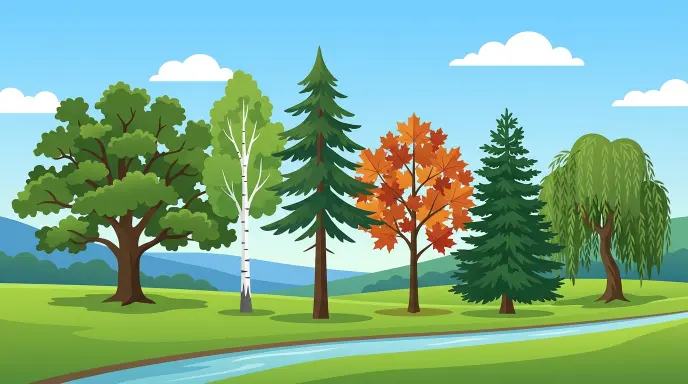
4. Tree Species
Meaning:
A particular kind or species of tree.
Explanation:
This is more specific than tree. It is useful when discussing classification rather than one individual tree.
Example:
“The region supports several native tree species.”
Best Use:
Academic, environmental, forestry, and educational writing.
Worst Use:
When you are referring to one individual tree.
Tone:
Formal and precise.
5. Arborescent Plant
Meaning:
A plant that has a tree-like form.
Explanation:
Arborescent means tree-like. An arborescent plant may resemble a tree without fitting the everyday definition of a tree.
Example:
“The landscape contains several arborescent plants adapted to dry conditions.”
Best Use:
Botanical or highly technical writing.
Worst Use:
General audiences who may not recognize the term.
Tone:
Highly formal and technical.
6. Deciduous Tree
Meaning:
A tree that normally sheds its leaves seasonally.
Explanation:
This is not a general synonym. It is a narrower category of tree.
Example:
“The park contains several deciduous trees that turn yellow in autumn.”
Best Use:
Descriptions involving seasons, landscaping, ecology, or plant biology.
Worst Use:
When you mean every kind of tree.
Tone:
Neutral to formal.
7. Evergreen
Meaning:
A plant that retains foliage throughout the year or replaces leaves gradually rather than losing all of them seasonally.
Explanation:
Many evergreens are trees, but some are shrubs. Therefore, evergreen cannot always replace tree.
Example:
“Evergreen trees provide shelter during the winter.”
Best Use:
Landscaping, gardening, ecology, and seasonal descriptions.
Worst Use:
When the species or growth form is unknown.
Tone:
Neutral and descriptive.
8. Conifer
Meaning:
A member of a group of plants that generally reproduce through cones.
Explanation:
Many familiar conifers are trees, including pines, firs, and spruces. However, not every conifer is necessarily a large tree.
Example:
“The mountain slope is covered with conifers.”
Best Use:
Forestry, ecology, gardening, and scientific writing.
Worst Use:
As a replacement for every tree.
Tone:
Technical but widely understood.
9. Hardwood
Meaning:
A tree or wood classified as hardwood, generally from broadleaf trees.
Explanation:
Hardwood can refer to the tree category or the wood produced by such trees. It is not interchangeable with tree.
Example:
“The forest contains several valuable hardwood species.”
Best Use:
Forestry, woodworking, construction, and environmental writing.
Worst Use:
When referring to a tree without regard to its botanical category.
Tone:
Professional and technical.
10. Broadleaf
Meaning:
A plant with relatively broad leaves rather than needle-like foliage.
Explanation:
Broadleaf is a classification term, not a direct synonym. Many broadleaf plants are trees, but some are shrubs or other plants.
Example:
“Broadleaf trees dominate much of the lower valley.”
Best Use:
Ecology, forestry, and landscape descriptions.
Worst Use:
Simple everyday writing.
Tone:
Technical and descriptive.
11. Native Tree
Meaning:
A tree that naturally occurs in a particular region.
Explanation:
Native describes origin, not the basic meaning of tree.
Example:
“The restoration project focuses on native trees.”
Best Use:
Conservation, environmental reports, landscaping, and ecology.
Worst Use:
When geographic origin is irrelevant.
Tone:
Professional and environmental.
12. Ornamental Tree
Meaning:
A tree grown mainly for decorative or aesthetic purposes.
Explanation:
This term narrows the meaning by focusing on purpose.
Example:
“The homeowner planted an ornamental tree beside the entrance.”
Best Use:
Gardening, landscaping, property descriptions, and horticulture.
Worst Use:
When discussing wild or forest trees generally.
Tone:
Professional and descriptive.
Semi-Formal and Neutral Alternatives
Everyday writing often needs words that are clear without sounding technical. These alternatives can help you avoid repeating tree, but each has its own meaning.
13. Plant
Meaning:
A living organism that typically grows by using sunlight, water, and nutrients.
Explanation:
Plant is much broader than tree. Every tree is a plant, but most plants are not trees.
Example:
“The children planted a young tree in the school garden.”
Best Use:
General writing when the exact type is not important.
Worst Use:
When the reader needs to know that the subject is specifically a tree.
Tone:
Neutral.
14. Sapling
Meaning:
A young tree.
Explanation:
This is one of the most useful substitutes when you specifically mean a young tree. It should not replace tree if the age is unknown.
Example:
“The volunteers planted fifty saplings along the trail.”
Best Use:
Gardening, conservation, forestry, and descriptions of young trees.
Worst Use:
For an old or mature tree.
Tone:
Neutral and descriptive.
15. Seedling
Meaning:
A very young plant that has recently developed from a seed.
Explanation:
A seedling can eventually become a tree, but the word does not necessarily mean a tree.
Example:
“The nursery carefully protected the tree seedlings from frost.”
Best Use:
Gardening, farming, forestry, and early plant development.
Worst Use:
For a mature tree.
Tone:
Neutral and technical.
16. Young Tree
Meaning:
A tree that has not yet reached maturity.
Explanation:
This is more direct than sapling and can be useful when age or size needs to be clear.
Example:
“A young tree now grows beside the playground.”
Best Use:
General writing and educational explanations.
Worst Use:
When the tree is mature.
Tone:
Neutral.
17. Forest Tree
Meaning:
A tree that grows in a forest environment.
Explanation:
This phrase describes location or habitat rather than providing a true synonym.
Example:
“Many forest trees compete for sunlight beneath the canopy.”
Best Use:
Ecology, environmental writing, and nature descriptions.
Worst Use:
For a tree growing alone in an urban yard.
Tone:
Neutral and descriptive.
18. Shade Tree
Meaning:
A tree valued for the shade provided by its branches and leaves.
Explanation:
This term focuses on function. It is especially common in landscaping and property descriptions.
Example:
“We planted a shade tree near the patio.”
Best Use:
Gardening, landscaping, homes, parks, and outdoor spaces.
Worst Use:
When the tree’s shading function is not relevant.
Tone:
Friendly and descriptive.
19. Fruit Tree
Meaning:
A tree that produces edible fruit.
Explanation:
This is a specific category, such as an apple, peach, orange, or mango tree.
Example:
“The backyard contains several fruit trees.”
Best Use:
Gardening, agriculture, food production, and property descriptions.
Worst Use:
For non-fruiting trees.
Tone:
Neutral.
20. Stand
Meaning:
A group of trees growing together in a particular area.
Explanation:
Stand does not mean one tree. In forestry, it can describe a distinct group of trees with similar characteristics.
Example:
“The survey identified a mature stand of pine trees.”
Best Use:
Forestry and environmental writing.
Worst Use:
When referring to one individual tree.
Tone:
Technical.
21. Grove
Meaning:
A small group of trees growing together.
Explanation:
A grove is a collection of trees, often with a pleasant or natural setting. It cannot replace tree when only one plant is meant.
Example:
“We walked through a quiet grove of olive trees.”
Best Use:
Nature writing, geography, travel writing, and everyday descriptions.
Worst Use:
For a single tree.
Tone:
Neutral and slightly picturesque.
22. Woodland
Meaning:
An area covered mainly by trees and other vegetation.
Explanation:
This describes an environment rather than an individual tree.
Example:
“The trail passes through dense woodland.”
Best Use:
Landscape descriptions, ecology, geography, and travel writing.
Worst Use:
When the subject is one particular tree.
Tone:
Neutral and descriptive.
Informal and Everyday Alternatives
There are few genuine slang synonyms for tree. English speakers normally continue to use tree in casual conversation. However, several informal or descriptive expressions can work in particular situations.
23. Big Tree
Meaning:
A large tree.
Example:
“Meet me beside the big tree near the entrance.”
When it sounds natural:
Casual conversation, directions, and simple descriptions.
When to avoid it:
Formal reports or scientific writing.
Tone:
Very casual.
24. Little Tree
Meaning:
A small or young tree.
Example:
“There’s a little tree growing beside the fence.”
When it sounds natural:
Family conversation, casual descriptions, and simple storytelling.
When to avoid it:
Technical or professional writing.
Tone:
Casual and friendly.
25. Old Tree
Meaning:
A tree that has been growing for a long time.
Example:
“We sat under the old tree in the backyard.”
When it sounds natural:
Personal stories and everyday conversation.
When to avoid it:
When the tree’s actual age is unknown and accuracy matters.
Tone:
Casual and descriptive.
26. Huge Tree
Meaning:
A very large tree.
Example:
“There’s a huge tree blocking part of the view.”
When it sounds natural:
Informal speech and vivid descriptions.
When to avoid it:
Scientific or formal writing.
Tone:
Informal and emphatic.
27. Greenery
Meaning:
Green plants collectively, especially leaves and vegetation.
Example:
“The garden is surrounded by greenery.”
When it sounds natural:
Casual descriptions, home writing, and lifestyle content.
When to avoid it:
When you need to identify a specific tree.
Tone:
Casual and broad.
28. Timber
Meaning:
Wood prepared for construction or other uses.
Example:
“The forest provides timber for local industries.”
When it sounds natural:
Forestry, construction, and discussions of wood products.
When to avoid it:
If you are talking about a living tree.
Tone:
Professional and practical.
True Synonyms vs. Contextual Alternatives
The biggest challenge with this word is that English has relatively few exact one-word synonyms for tree. Most alternatives describe something related to a tree rather than the same thing.
| Type | What It Means | Can It Replace “Tree”? |
|---|---|---|
| True synonym | Nearly the same meaning in the same context | Rarely; “tree” has no common perfect one-word replacement |
| Near synonym | Similar general meaning but slightly different scope | Sometimes, depending on context |
| Contextual alternative | A related word used because of a specific situation | Yes, only when that context applies |
| Broader expression | A word covering trees plus other things | Sometimes, but meaning becomes less specific |
| Narrower expression | A particular type, age, or category of tree | Yes, when that narrower meaning is intended |
Why this distinction matters
Consider this sentence:
“A tree stood beside the road.”
Replacing tree with sapling changes the sentence. A sapling is specifically young. Replacing it with conifer also changes the meaning because a conifer is only one category of tree.
Similarly, forest cannot replace tree because a forest contains many trees and other living things. Wood refers mainly to the material associated with trees, not necessarily the living organism.
For precise writing, ask yourself: Am I naming the plant, its type, its age, its material, its surroundings, or its function?
Industry-Specific Usage
Business Writing
Business writing usually does not need a synonym for tree unless the subject involves forestry, agriculture, landscaping, paper, timber, construction, or environmental planning.
For example:
- “The company manages several forest stands.”
- “The project uses certified timber.”
- “The property contains mature shade trees.”
- “The report identifies several native tree species.”
Use the most specific term rather than replacing tree simply for variety.
Corporate Communication
Environmental reports and sustainability documents may use terms such as native species, forest stands, woody plants, and tree cover.
Example:
“The project will preserve existing tree cover wherever practical.”
Here, tree cover means the area covered by tree canopies rather than individual trees.
Academic Writing
Academic writing benefits from precision.
Instead of repeatedly writing tree, you might use:
- tree species
- woody plant
- deciduous species
- conifer
- sapling
- mature tree
- plant specimen
- forest stand
Example:
“The study compared growth rates among three native tree species.”
This is more informative than simply saying:
“The study compared trees.”
Customer Service
Customer-service writing should favor plain language.
Instead of technical terms such as arborescent plant, say:
“The tree beside your property may need to be inspected.”
If discussing landscaping, shade tree, ornamental tree, or fruit tree may be useful when the category is known.
Legal Writing
Legal writing should avoid replacing tree with an imprecise related term when the exact object matters. A property agreement, dispute, or municipal document may need to distinguish between an individual tree, vegetation, timber, branches, roots, or a group of trees.
For example, if a document concerns a particular tree, simply using vegetation could be too broad because vegetation may include grass, shrubs, and other plants.
Legal documents should use the terminology defined by the relevant agreement or applicable law rather than choosing a synonym merely for stylistic variety.
Email Communication
Professional emails should usually keep tree when that is the clearest word.
Use a more specific alternative only when it adds information:
- “We will remove the damaged tree.”
- “We will replace it with a native shade tree.”
- “The nursery has confirmed that the sapling is ready.”
- “The landscaping plan includes three ornamental trees.”
Clarity is more valuable than avoiding repetition.
Email Examples
1. Landscaping Client Email
Subject: Tree Removal Update
Hello Ms. Carter,
The damaged tree near the driveway has been inspected, and the landscaping team recommends removing it for safety reasons. We can also provide a replacement native tree once the removal is complete.
Please let me know if you would like us to include the replacement in the updated estimate.
Best,
Daniel
2. Project Update
Subject: Native Tree Planting Schedule
Hi Team,
The first phase of the planting project is scheduled for next Tuesday. We plan to install 40 native trees along the eastern boundary.
The younger saplings will receive additional support during their first season of growth.
Thanks,
Maya
3. Academic Email
Subject: Question About Tree Species
Dear Professor Lee,
I am reviewing the field notes for our ecology assignment and wanted to confirm whether we should identify each tree species individually or only record the broader plant groups.
I want to make sure my observations follow the assignment guidelines.
Thank you,
Jordan
4. Vendor Email
Subject: Timber Order Confirmation
Hello Mr. Patel,
Thank you for sending the updated quotation. We would like to confirm the quantity of timber listed in the revised order.
Please also confirm the expected delivery date.
Regards,
Emily
5. Property Management Email
Subject: Shade Tree Inspection
Hello,
A large shade tree near the parking area has several damaged branches following the recent storm. We would like to arrange an inspection before deciding whether pruning is necessary.
Please let us know the earliest available appointment.
Best regards,
Alex
6. Environmental Project Email
Subject: Forest Stand Survey
Hi Elena,
We completed the first survey of the forest stand this week. The team recorded the approximate number of mature trees, saplings, and fallen branches within the study area.
We will add the observations to the project report tomorrow.
Best,
Chris
Short Dialogue Examples
Workplace
Person A: Did the landscaper identify the tree near the entrance?
Person B: Yes. It’s a mature oak, and they recommend trimming a few branches.
Classroom
Person A: Is “sapling” another word for tree?
Person B: It can replace “tree” when you mean a young tree. It’s more specific.
Customer Service
Person A: Which plant should I choose for shade?
Person B: A shade tree would be a good option if you have enough space.
Casual Conversation
Person A: Where should I meet you?
Person B: By the huge tree next to the parking lot.
Professional Discussion
Person A: Should we write “trees” throughout the report?
Person B: Use “tree species” when we’re discussing classification. It’s more precise.
How to Replace “Tree” in a Sentence
Example 1
Original:
The tree is growing beside the house.
Alternative:
The woody plant is growing beside the house.
Why it works:
It is technically related, but it is broader than tree. Keep tree if the exact plant type matters.
Example 2
Original:
The tree was planted last spring.
Alternative:
The sapling was planted last spring.
Why it works:
This works if the plant is known to be young.
Example 3
Original:
The forest contains many trees.
Alternative:
The forest contains many conifers.
Why it works:
Only use this version if the trees are actually conifers.
Example 4
Original:
We planted a tree in the backyard.
Alternative:
We planted a shade tree in the backyard.
Why it works:
The alternative adds a purpose: the tree is intended to provide shade.
Example 5
Original:
The researchers studied trees in the region.
Alternative:
The researchers studied native tree species in the region.
Why it works:
This is more precise if the research focuses on naturally occurring species.
Example 6
Original:
The gardener removed the tree.
Alternative:
The gardener removed the ornamental tree.
Why it works:
The alternative specifies the tree’s landscaping role.
Example 7
Original:
The tree produces fruit every summer.
Alternative:
The fruit tree produces fruit every summer.
Why it works:
The second sentence emphasizes the tree’s category.
Example 8
Original:
The area contains many trees.
Alternative:
The area contains dense woodland.
Why it works:
This changes the focus from individual trees to the larger wooded environment.
Example 9
Original:
The forest has many trees.
Alternative:
The forest has several mature stands.
Why it works:
Use stands only when referring to groups of trees, particularly in forestry.
Example 10
Original:
The tree provides shade near the patio.
Alternative:
The shade tree provides cover near the patio.
Why it works:
The replacement works when the tree’s main relevant feature is its shade.
Comparison Table
| Phrase | Tone | Meaning / Scope | Best Use | Example |
|---|---|---|---|---|
| Tree | Neutral | General woody plant | Almost any general context | “The tree is tall.” |
| Woody plant | Formal | Broad plant category | Botany | “The woody plant survived.” |
| Sapling | Neutral | Young tree | Forestry, gardening | “The sapling needs water.” |
| Seedling | Neutral | Very young plant | Propagation | “The seedling is delicate.” |
| Evergreen | Neutral | Plant retaining foliage | Landscaping | “The evergreen stays green.” |
| Conifer | Technical | Cone-bearing plant group | Forestry | “The slope has conifers.” |
| Hardwood | Technical | Broadleaf tree/wood category | Forestry, woodworking | “The forest contains hardwood.” |
| Shade tree | Neutral | Tree valued for shade | Landscaping | “We planted a shade tree.” |
| Fruit tree | Neutral | Tree producing fruit | Gardening | “The fruit tree is flowering.” |
| Tree species | Formal | A particular tree category | Research | “Three tree species were studied.” |
| Forest tree | Neutral | Tree associated with forests | Ecology | “Forest trees compete for light.” |
| Stand | Technical | Group of trees | Forestry | “The stand is mature.” |
| Grove | Neutral | Small group of trees | Nature writing | “An olive grove surrounds the farm.” |
| Woodland | Neutral | Tree-covered area | Geography | “The path enters woodland.” |
| Timber | Professional | Wood used as material | Construction, forestry | “The timber was transported.” |
Which Alternative Should You Choose?
For formal writing
Choose woody plant, tree species, plant specimen, or a specific classification such as conifer or deciduous tree.
For business communication
Use tree, native tree, ornamental tree, shade tree, or timber, depending on the subject.
For academic writing
Prefer precise terms such as tree species, woody plant, sapling, conifer, or forest stand.
For legal writing
Use the exact term required by the document or relevant rule. Do not replace tree with a broader word such as vegetation if the distinction matters.
For professional email
Usually use tree. Replace it only when a more specific term adds useful information.
For everyday conversation
Tree, big tree, old tree, little tree, and huge tree are natural choices.
For casual messages
Simple descriptive phrases usually sound best. For example, “the big tree near the gate” is more natural than “the woody plant near the gate.”
Grammar and Usage Guide
“Tree” is a countable noun
You can use singular and plural forms:
- one tree
- a tree
- several trees
- many trees
- a row of trees
Example:
“There is a tree outside the window.”
“There are three trees outside the window.”
Use “tree” with “a” or “the”
Because tree is countable, a singular tree normally needs a determiner.
Correct:
“I saw a tree.”
“The tree is very tall.”
Incorrect:
“I saw tree.”
Common prepositions
Several prepositions commonly appear with tree:
- under a tree — “We sat under a tree.”
- in a tree — “A bird was sitting in the tree.”
- near a tree — “The bench is near the tree.”
- beside a tree — “She stood beside the tree.”
- by a tree — “Meet me by the tree.”
- among the trees — “The cabin sits among the trees.”
“Tree” vs. “wood”
A tree is the living plant.
Wood is the hard material that forms much of the plant’s structure and can be used after harvesting or processing.
“The tree is growing.”
“The table is made of wood.”
They are related but not interchangeable.
“Tree” vs. “timber”
Timber generally refers to wood intended for use as a material, or, in some contexts, trees grown or harvested for that purpose.
“The tree is alive.”
“The timber was delivered to the mill.”
“Tree” vs. “forest”
A tree is an individual plant.
A forest is a larger area dominated by trees and associated vegetation.
“A tree stands beside the road.”
“The road passes through a forest.”
Capitalization
The common noun tree is normally lowercase.
Correct:
“The tree is growing quickly.”
Capitalize it only when it appears as part of a proper name or title that requires capitalization.
Natural word combinations
Common combinations include:
- tall tree
- mature tree
- young tree
- old tree
- native tree
- fruit tree
- shade tree
- ornamental tree
- tree species
- tree canopy
- tree trunk
- tree roots
- tree branch
- tree cover
- tree line
These combinations are often more natural than forcing a synonym.
Common Mistakes to Avoid
1. Calling “plant” an exact synonym
A plant is broader than a tree. Grass, flowers, shrubs, and many other organisms are plants.
2. Using “sapling” for every tree
A sapling is a young tree. Do not use it for a mature tree.
3. Treating “forest” as a synonym
A forest is an environment containing many trees and other organisms. It does not mean one tree.
4. Confusing wood with the living tree
Wood is a material. A living tree is an organism.
5. Using “conifer” for every tree
Conifer refers to a particular plant group. Oaks, maples, and many other trees are not conifers.
6. Using “evergreen” as a perfect replacement
Evergreen describes foliage behavior, not the basic meaning of tree. Some evergreen plants are shrubs.
7. Using technical words when simple English works
“Arborescent plant” may be accurate in a botanical paper but unnecessarily complicated in everyday writing.
8. Changing the number
Tree and trees are not interchangeable. Check whether your sentence refers to one plant or several.
9. Replacing a word just to avoid repetition
Repeating tree is often better than choosing an inaccurate alternative. Precision matters more than forced variety.
When Not to Replace the Word “Tree”
There are several situations where tree is actually the best choice.
1. The exact category is unknown
If you do not know whether something is a conifer, hardwood, evergreen, or deciduous tree, simply say tree.
2. The audience needs simple language
For children, general readers, customer-service messages, and casual conversations, tree is usually clearer than technical alternatives.
3. Precision matters
If a report is discussing one individual tree, replacing it with vegetation makes the statement less precise.
4. The related word changes the meaning
Do not use sapling unless the tree is young. Do not use timber when describing a living plant.
5. You are writing directions
A phrase such as “the big tree beside the gate” may be more useful than a technical botanical term.
6. Repetition is not actually a problem
If the paragraph is about trees, repeating tree naturally is completely acceptable.
The original word is often better because it is short, familiar, and immediately understood.
Advanced Writer Tips
Tone Control
Technical tone, use terms such as woody plant, tree species, conifer, or forest stand.
For a neutral tone, use tree, sapling, young tree, or native tree.
A conversational tone, descriptive phrases such as big tree or old tree work naturally.
Professional Email Etiquette
Do not replace tree merely to make an email sound professional. Professional writing comes from being clear and specific.
Instead of:
“We will remove the woody plant.”
write:
“We will remove the damaged tree.”
The second version is simpler and more natural.
Politeness
The word itself is not usually a politeness issue. The surrounding sentence matters more.
Compare:
“Remove the tree.”
with:
“Could you please arrange for the damaged tree to be inspected?”
The second sentence is more polite because of its structure, not because tree has been replaced.
Context Alignment
Ask what information matters:
- Age: sapling, mature tree
- Type: conifer, hardwood, evergreen
- Purpose: shade tree, ornamental tree, fruit tree
- Location: forest tree
- Group: grove, stand
- Material: timber, wood
- Scientific category: woody plant, tree species
Precision
Choose the narrowest accurate term that helps the reader.
If you know the tree is young, sapling is more informative than tree. If you know only that it is a tree, stay with tree.
Readability
Do not use specialized terminology simply because it sounds advanced. A clear sentence such as:
“The researchers studied native trees.”
is often better than:
“The researchers studied native woody perennial specimens.”
Use technical terminology only when it adds real meaning.
Related Questions
What is another way to say “tree”?
There is no common perfect one-word synonym for tree. Depending on context, you can use woody plant, sapling, evergreen, conifer, hardwood, shade tree, or tree species.
What is a professional alternative to “tree”?
Woody plant, tree species, plant specimen, and specific classifications such as conifer or deciduous tree can work in professional writing. However, tree itself is already professional and often clearer.
What is a formal word for tree?
Woody plant is one of the closest formal alternatives, although it is broader than tree. Arborescent plant is more technical and means tree-like.
Can “plant” replace “tree”?
Sometimes, but plant is broader. Use it only when the exact distinction between a tree and other plants does not matter.
Is “sapling” another word for tree?
Only partly. A sapling is a young tree, so it is a narrower term rather than a perfect synonym.
Is “wood” another word for tree?
No. Wood is material found in trees and used for many purposes. A living tree and wood are different things.
What is the difference between a tree and a shrub?
A tree is generally understood as a woody plant with a main trunk or tree-like structure, while a shrub is usually shorter and often has multiple woody stems. The biological distinction can vary by species and context.
FAQs
1. What is the closest synonym for tree?
Woody plant is one of the closest formal alternatives, but it is broader because shrubs and some other plants can also be woody. In ordinary English, tree remains the clearest general word.
2. What is a more scientific word for tree?
There is no single scientific replacement that works in every situation. Terms such as woody plant, tree species, arborescent plant, and specific classifications such as conifer may be appropriate depending on the subject.
3. What is another word for a young tree?
Sapling is the most useful common word for a young tree. Seedling can also apply to a very young tree, but it more broadly describes a young plant grown from a seed.
4. Is “evergreen” a synonym for tree?
No. Evergreen describes a plant that generally retains foliage year-round. Many evergreen plants are trees, but some are shrubs, so the words do not have the same meaning.
5. Is “forest” another word for tree?
No. A forest is an area containing many trees along with other plants, animals, and ecological features. A grove is also a group of trees rather than one tree.
6. What is the difference between a tree and timber?
A tree is a living plant. Timber is wood used or prepared as a material, particularly for construction and related purposes. Referring to a living tree as timber can change the meaning.
7. Should I use synonyms for “tree” in formal writing?
Use alternatives only when they make the meaning more precise. Replacing tree with a related word simply to avoid repetition can make your writing less accurate. Often, repeating tree is the best choice.
Key Takeaways
- Tree has few true one-word synonyms, so context matters more than simple word substitution.
- Woody plant is a useful formal alternative, but it is broader than tree.
- Sapling, conifer, evergreen, hardwood, and fruit tree are narrower terms with specific meanings.
- Forest, grove, woodland, timber, and wood are related concepts, not direct synonyms.
- The best replacement is the word that adds accurate information without changing what the sentence means.
Conclusion:
The word tree is already clear, natural, and widely useful, so you do not need to replace it simply to make your writing more varied. Most alternatives describe a particular aspect of a tree rather than the same thing.
Woody plant is a useful formal term, while sapling identifies a young tree. Conifer, evergreen, hardwood, fruit tree, shade tree, and ornamental tree add information about type or purpose.
Words such as grove, woodland, forest, timber, and wood describe groups, environments, or materials and should not be treated as exact synonyms.
The right choice depends on your purpose. In everyday conversation, tree is usually the strongest option. In academic or professional writing, a more specific term can improve precision when the distinction matters.
Rather than searching for a replacement every time the word appears, focus on whether the alternative makes the sentence clearer, more accurate, or more informative.
